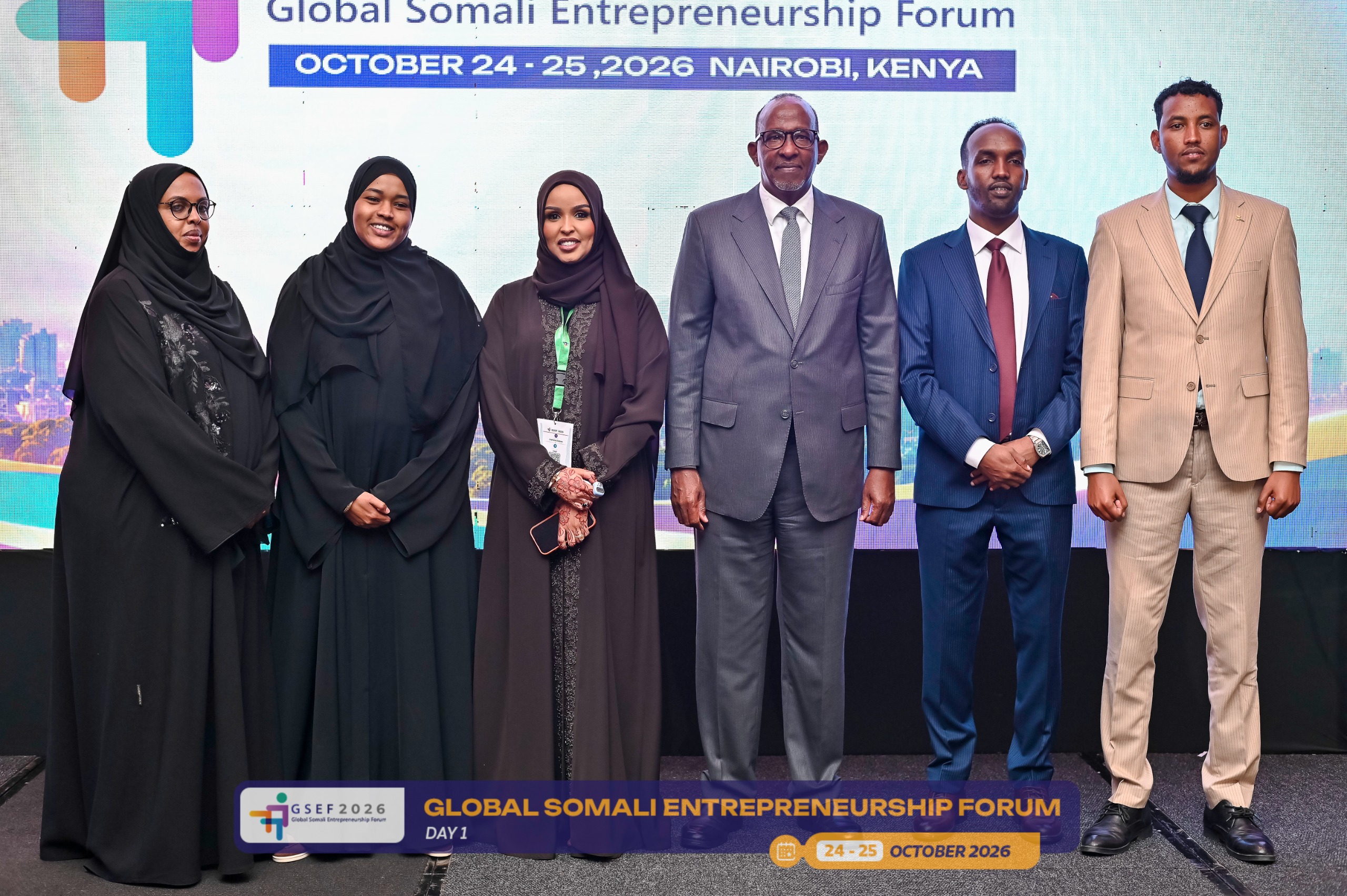
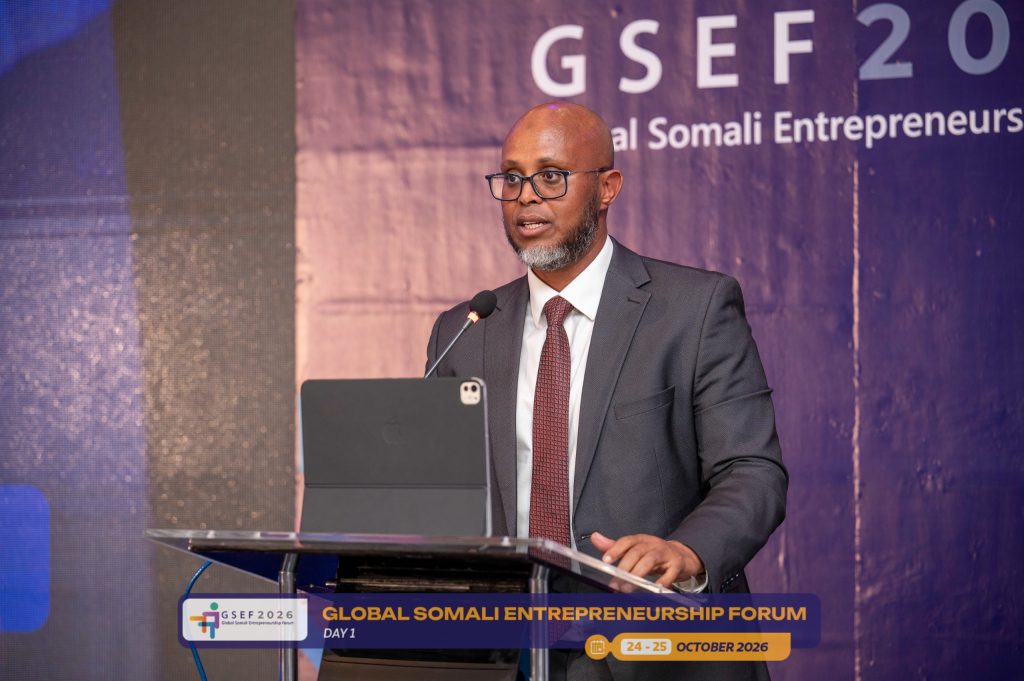
- At the Global Somali Entrepreneurship Forum 2026, EABC Executive Director Ahmed Farah highlights opportunities for Somali enterprises under EAC integration, stronger regional value chains, and investment in local production.
Nairobi, Kenya | 24 October 2026 — The East African Business Council (EABC) has called for greater investment in local production, stronger regional partnerships and a more competitive business environment to help Somali enterprises benefit from regional integration and expand into East African markets.
Delivering his remarks at the third Global Somali Entrepreneurship Forum (GSEF) 2026, EABC Executive Director Mr. Ahmed Farah emphasised that Somalia’s membership in the East African Community (EAC) presents significant opportunities for Somali businesses to access new markets, attract investment, strengthen value chains and create jobs.
He noted that Somalia brings considerable strengths to the regional bloc, including a dynamic business community, an established diaspora network, strategic maritime trade routes and opportunities in logistics, fisheries, agriculture, financial services and technology.
“Somalia’s membership in the EAC creates opportunities not only for Somali enterprises, but also for businesses throughout East Africa seeking new markets and partnerships,” Mr. Farah said.
 Mr. Farah highlighted the growth of regional trade, noting that total EAC trade increased from US$124.9 billion in 2024 to US$156.6 billion in 2025, representing growth of 25.4 per cent. Intra-EAC trade rose from US$15.25 billion to US$19.54 billion over the same period, an increase of approximately 28 per cent.
Despite this growth, trade among EAC Partner States accounted for only about 12.5 per cent of the region’s total trade in 2025, indicating considerable potential for businesses to increase regional sourcing, production and market linkages.
For Somalia, this presents an opportunity to leverage established entrepreneurial networks and diaspora connections to identify regional demand, expand local production and ensure that more value addition and job creation take place within the country.
According to figures cited in the address from the Central Bank of Somalia, the country’s trade in goods reached US$11.2 billion in 2025, comprising imports of US$9.74 billion and exports of US$1.44 billion. The figures highlight the importance of strengthening domestic productive capacity and expanding export opportunities.
EABC underscored the potential of sectors such as fisheries and livestock to drive export growth, create employment and strengthen Somalia’s participation in regional value chains.
Investments in processing, packaging and reliable cold-storage facilities could help retain more value within Somalia, supported by stronger links between producers, input suppliers, distributors and regional retailers.
 Mr. Farah also emphasised the importance of integrating women- and youth-led enterprises into these value chains as suppliers and service providers, supported by clear quality requirements, fair contracts and timely payments.
He noted that Somali enterprises operating in financial services, technology and logistics could also benefit from regional partnerships that connect them to customers and provide the payment, transport and delivery services needed to support cross-border commerce.
EABC called for continued efforts to improve the business environment in Somalia, highlighting the importance of reliable electricity, affordable transport, recognised testing and certification systems, predictable taxation and efficient licensing procedures.