Friday, 23rd October 2026 | Dar es Salaam, Tanzania: Regional industry leaders and policymakers have called for predictable trade policies, affordable industrial finance, reliable raw materials and time-bound reforms to strengthen manufacturing and value addition across the East African Community (EAC).
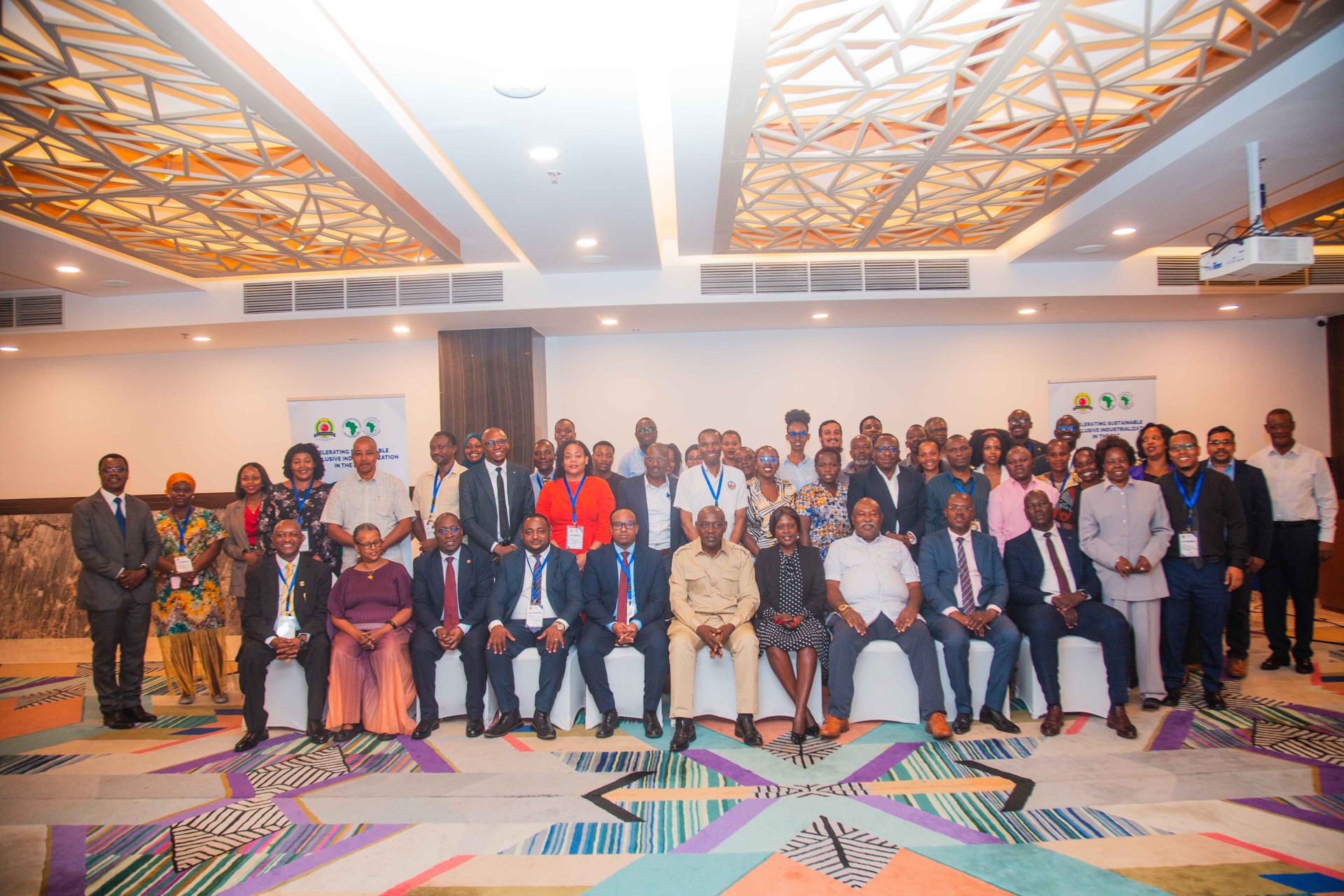
The call was made during the East African Business Council (EABC)–African Development Bank (AfDB) Public–Private Dialogue (PPD) on the Leather, Textiles and Edible Oils Value Chains in Dar es Salaam, Tanzania. The two-day Dialogue brought together 65 representatives from governments, the EAC Secretariat, manufacturers, business membership organisations, development partners and technical institutions to discuss study findings and identify practical solutions to constraints affecting industrial competitiveness.
In his welcome remarks EABC Executive Director Mr. Ahmed Farah represented by Mr. Adrian R. Njau, EABC Trade and Policy Advisor, EABC thanked the Government of the United Republic of Tanzania, the Confederation of Tanzania Industries (CTI) and AfDB for supporting the Dialogue. The remarks highlighted the gap between the region’s resource base and manufacturing performance. In the leather value chain, the region produces approximately 370,000 tonnes of hides and skins annually but imported around US$566 million in footwear, footwear parts and leather goods in 2025, compared with exports of approximately US$46 million in hides and semi-processed leather.
In textiles, only about 37% of the region’s approximately 119,000 tonnes of cotton lint is spun locally. Imports of textiles, apparel and used clothing reached US$3.24 billion in 2025, against exports of approximately US$970 million. In edible oils, imports amounted to approximately US$3.1 billion, compared with exports of US$1.2 billion, while the region produced approximately 37% of its edible oil consumption.
Mr. Frank Dafa, Executive Director of CTI, emphasised the importance of linking agriculture and livestock production to manufacturing. He called for stronger vertical integration, coherent application of the Common External Tariff (CET), rules of origin and duty remission, strategic public procurement, and investment in technology, skills and infrastructure.
Mr. Sylvester Kazi, a member of the EABC–AfDB Project Steering Committee, highlighted the need for trade instruments to operate as a coherent regional system. Priorities included reviewing rules of origin for edible oils, improving access to industrial inputs, establishing evidence-based criteria for stays of application and strengthening regional approaches to local content and public procurement.
The Chief Guest, Mr. Amedeus Arbogast Mzee of the Ministry of Foreign Affairs and East African Cooperation, Tanzania, emphasised the importance of commercially viable solutions supported by clear timelines, resource requirements and measurable outcomes. He called for stronger coordination among Partner States, manufacturers, farmers, financial institutions and development partners to improve raw-material supply, infrastructure, skills and investment.
Presenting the Growth Diagnostic and Competitiveness Study, Dr. Onesmos Shuma of Excellon Group reported that 79% of surveyed firms operate below 75% of production capacity, while 67% have delayed investment. The study also found that 78% face technology gaps and 76% believe they could source more inputs within the EAC.
By sector, 75% of surveyed edible-oil firms, 74% of textile and apparel firms, and 86% of leather and footwear firms operate below 75% of capacity. Investment had been postponed or cancelled by 59% of edible-oil firms, 61% of textile and apparel firms and 79% of leather and footwear firms.
The study identified six major constraints: access to industrial raw materials, finance suited to production cycles, technology and maintenance, market scale and buyer linkages, skills and production management, and standards, trade and operating costs.
The panel on growth diagnostic and competitiveness highlighted opportunities to expand agricultural raw-material production, revive intermediate textile processing, improve edible-oil manufacturing and provide financing tailored to different stages of the leather value chain.
Recommendations included strengthening regional raw-material supply chains, expanding access to affordable industrial finance, investing in technology and skills, and improving supplier–buyer linkages to raise industrial capacity and value addition.
The panellists were, Fiona Chichi Loki of the South Sudan Chambers of Commerce, Industries and Agriculture; Businge Wilson Rwabwogo of Mukwano Group, Uganda; Kanduki Kakule Simon of the Fédération des Entreprises du Congo; Sylvester Kazi of A To Z Group; and Ramadhan Sizya of Tanzania’s Ministry of Industry and Trade explored opportunities to strengthen regional production. The session was moderated by Patrick Patterson Moshi of EABC.
In the session on EAC trade instruments, Dr. Margaret Chemengich of Charmy Investments presented findings on how the CET, stays of application, duty remission, rules of origin, export levies, and Export Processing Zones and Special Economic Zones affect industrial competitiveness.
The analysis found that 25 of 39 stays affecting the three value chains had been renewed in every budget since financial year 2022/23. It also identified differences in the applied duty on refined sunflower oil across Partner States, ranging from approximately 26% in Tanzania to 60% in Uganda.
The findings highlighted the importance of assessing trade measures collectively to ensure they support regional sourcing and manufacturing without unintentionally increasing input costs or creating inconsistencies across value chains.
Panel session on EAC trade instruments emphasised that predictable and consistent application of trade instruments is important for reducing business costs and improving investment certainty. They called for evidence-based reviews of the CET, stays of application and duty remission, as well as harmonised standards and mutual recognition of conformity assessment results to facilitate intra-EAC trade.
The discussion also underscored the need for private sector proposals supported by evidence on production capacity, market demand, employment and investment, alongside regular assessment of whether implemented measures achieve their intended economic outcomes.
Participants called for priority actions such as strengthening regional raw-material supply systems, improving access to value-chain finance, upgrading technology and skills, developing supplier–buyer linkages, reducing standards and trade-related costs, and investing in shared testing and environmental infrastructure. Progress should be monitored through indicators such as industrial capacity utilisation, investment, regional sourcing, commercial contracts, compliance costs and trade performance.
The panel on EAC trade instruments was moderated by Deogratius Mbarara of the EAC Secretariat, included Bernadette Umunyana of Dokmai and the Private Sector Federation, Rwanda; Frank Dafa of CTI, Tanzania; Jackson Wambua of the Kenya Association of Manufacturers; Zarmar Muhammad M. Muzamil of the Uganda Manufacturers Association; Emmanuel Ntakirutimana of the Burundi Association of Manufacturers; and Charles Omusana of the EAC Secretariat.
Pictorial: https://photos.app.goo.gl/52pDaCXCawPbkNxS8