
Thursday 26th November 2026 | Nairobi, Kenya: Private sector associations from across the East African Community (EAC) have called on Partner State governments to scrap discriminatory taxes in their FY2027/28 budgets, clear outstanding non-tariff barriers (NTBs) and fast-track stalled regional laws, to harness the EAC bloc as a leading hub of trade and investment in the continent.
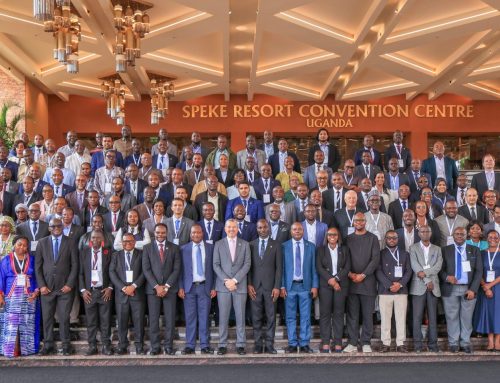
The appeal came at the close of the three-day EAC–EABC Technical Working Group (TWG) meeting, held in Nairobi from 24th to 26th November 2026 with support from GIZ. The meeting brought together Business Membership Organisations (BMOs), the East African Business Council (EABC) and the EAC Secretariat to agree regional policy advocacy priorities for 2027.
Top of the list is the removal of discriminatory taxes, outstanding NTBs eliminated, the amended EAC Elimination of NTBs Act passed and assented, the Single Customs Territory fully operationalised and the Simplified Trade Regime (STR) fully implemented for small cross-border traders. They further called for a regional assessment of Common External Tariff (CET) Stays of Application and duty remission, operationalisation of the EAC Trade Remedies Committee and assent of the SACA Bill, 2017.
On domestic taxes, the private sector is seeking harmonisation, including an excise duty band with both a floor and a ceiling, ratification of the EAC Double Taxation Agreement and lower Digital Tax Stamp (DTS) costs to ease the burden on manufacturers. To curb illicit trade, the BMOs proposed regional mutual recognition of intellectual property rights and a regional track-and-trace system for end-to-end product traceability. They also called for mutual recognition of professional qualifications.
With the 2027 Africa Cup of Nations (AFCON) to be co-hosted by Kenya, Tanzania and Uganda, the BMOs urged Partner States to liberalise air transport through Fifth Freedom rights, treat intra-EAC flights as domestic travel, remove visa restrictions, allow free movement of persons using national IDs and extend the One Network Area for voice and data across the region.
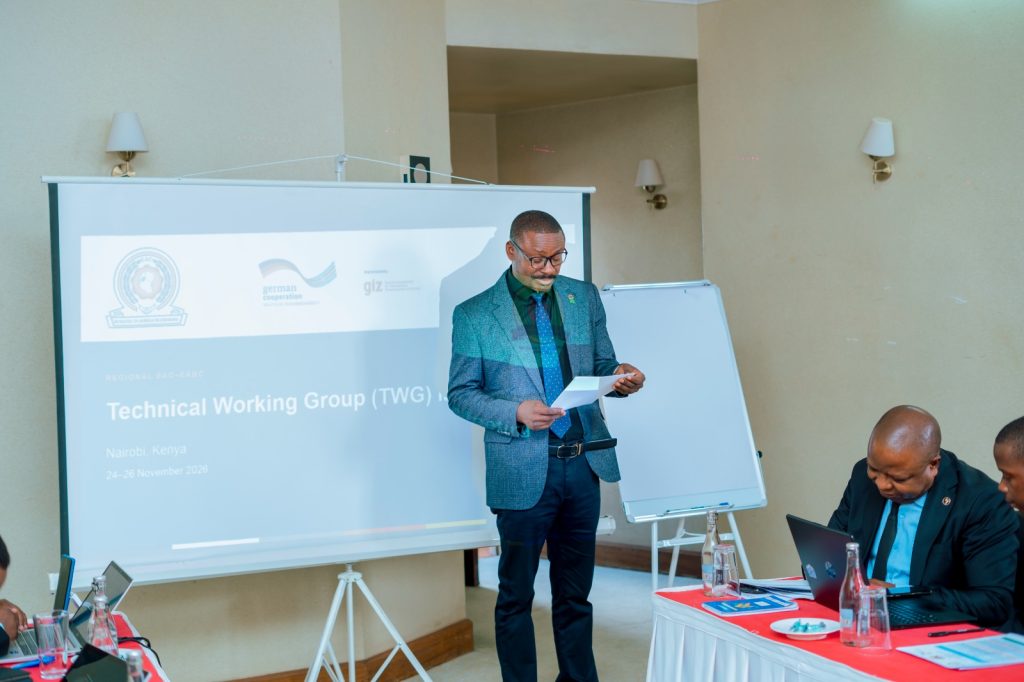 Speaking at the meeting, Mr. Ahmed Farah, Executive Director of EABC and Co-Chair of the TWG, represented by Mr. Adrian R. Njau, EABC Trade and Policy Advisor, said: “Since its relaunch in 2023, the Technical Working Group has become the private sector’s most direct channel into EAC decision-making. The Matrix of Regional Policy Priorities now informs private sector proposals in the EAC decision-making process, enabling the private sector to table policy proposals with one harmonised voice so that reforms move faster.”
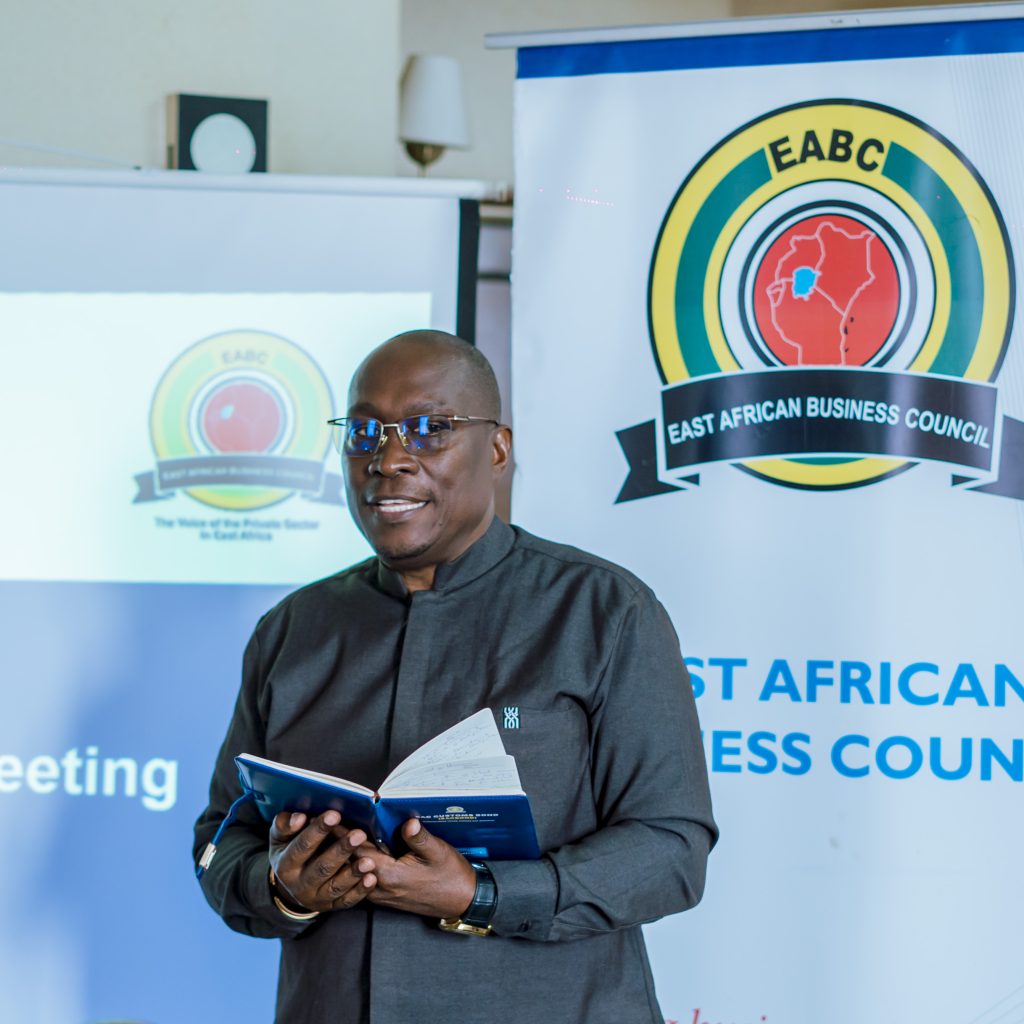 Ms. Annette Mutaawe Ssemuwemba, Deputy Secretary General – Customs, Trade and Monetary Affairs at the EAC Secretariat and Co-Chair of the TWG, represented by Mr. Charles Omusana, EAC Principal Economist, stated: “The EAC Treaty is clear that our integration must be market-driven and private sector-led, and this Technical Working Group is where that principle comes to life. Intra-EAC trade remains below 15 percent. Working hand in hand with the private sector, we will remove the barriers holding it back and deliver a fully fledged Customs Union and Common Market.”
Mr. Lamech Wesonga, Economic and Policy Advisor on AfCFTA at GIZ–EAC, reiterated GIZ’s continued commitment to supporting structured public–private dialogue: “Strengthening evidence-based advocacy through research and engagement is key to driving reforms that unlock trade and investment opportunities across the EAC,” he noted.
EABC highlighted its 2026 policy wins. The 25th EAC Heads of State Summit directed the elimination of all 27 reported NTBs by 30th June 2026, and EABC is tracking implementation. Following EABC’s dialogue at the Kobero–Kabanga border, the EAC gazetted the lists of products eligible for STR clearance, giving small traders an official reference at each border. After EABC’s FY2026/27 fiscal harmonisation brief, several Partner States moved to remove discriminatory taxes and agreed uniform tariff changes to reduce CET Stays of Application, while Tanzania exempted qualifying EAC-origin goods from the Industrial Development Levy.
The EAC Secretariat reported that the amended NTBs Act is ready to go to the East African Legislative Assembly (EALA), the revised EAC Rules of Origin have been adopted and await entry into force, and the SACA Bill has been passed by EALA and awaits assent. Draft regulations on mutual recognition of academic and professional qualifications are headed to the Sectoral Council on Legal and Judicial Affairs, and a roadmap has been adopted for negotiations on the five remaining services sectors. The EAC Secretariat also invited the private sector to comment on the formulation of the EAC Local Content Policy.
Other priorities include intermodal transport infrastructure and energy to reduce the cost of doing business; access to finance, cross-border payments and currency convertibility; stronger regional manufacturing value chains; Business for Peace dialogues to support business continuity and sustainability; regional sensitisation on the EAC Assembly and Manufacturing Schemes Regulations, 2025; and awareness sessions for manufacturers on the revised Rules of Origin. A joint tracker of decisions by the Sectoral Council on Trade, Industry, Finance and Investment (SCTIFI), the Council of Ministers and the East African Court of Justice will monitor implementation.
About the EAC–EABC TWG: The EAC–EABC Technical Working Group brings together representatives of Business Membership Organisations from across the EAC Partner States, the EAC Secretariat and EABC to examine barriers to trade and investment and to craft joint advocacy priorities and action plans that increase intra- and extra-EAC trade and investment.