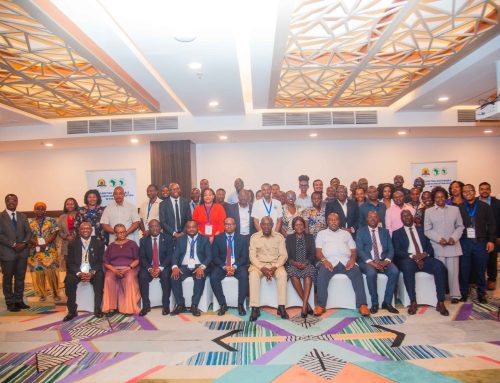

Kampala, Uganda | 18 August 2026: East African leaders and private-sector representatives have called for stronger public–private collaboration, deeper regional value chains and practical reforms to accelerate industrialisation at the 3rd Annual Regional Industrialisation Conference (RIC 2026), held in Kampala under the theme “Unlocking Industrial Competitiveness through Innovation and Regional Value Chain Integration.”
The conference was convened by the Uganda Industrial Research Institute (UIRI) and Private Sector Foundation Uganda (PSFU), in collaboration with the East African Business Council (EABC).
Representing H.E. Gen. Yoweri Kaguta Museveni, President of Uganda and Chairperson of the EAC Heads of State Summit, Hon. Henry Musasizi, Minister of State for Finance, called for stronger government–private sector engagement to address manufacturing constraints, increase production and expand regional markets. He highlighted the AfCFTA’s 1.4 billion-consumer market as a major opportunity for Uganda and East Africa.
Mr. Humphrey Nzeyi, Board Chair of PSFU, called for practical reforms to strengthen industrial competitiveness, urging stakeholders to “turn policy into action, production into prosperity.” The conference targeted at least US$500 million in bankable industrial investments.
Mr. Jas Bedi, EABC Vice Chair, called for more seamless regional trade, stating: “We should not even speak about a One Stop Border Post—we need a No Stop Border Post.” He urged policymakers to treat East Africa as one market rather than separate national markets.
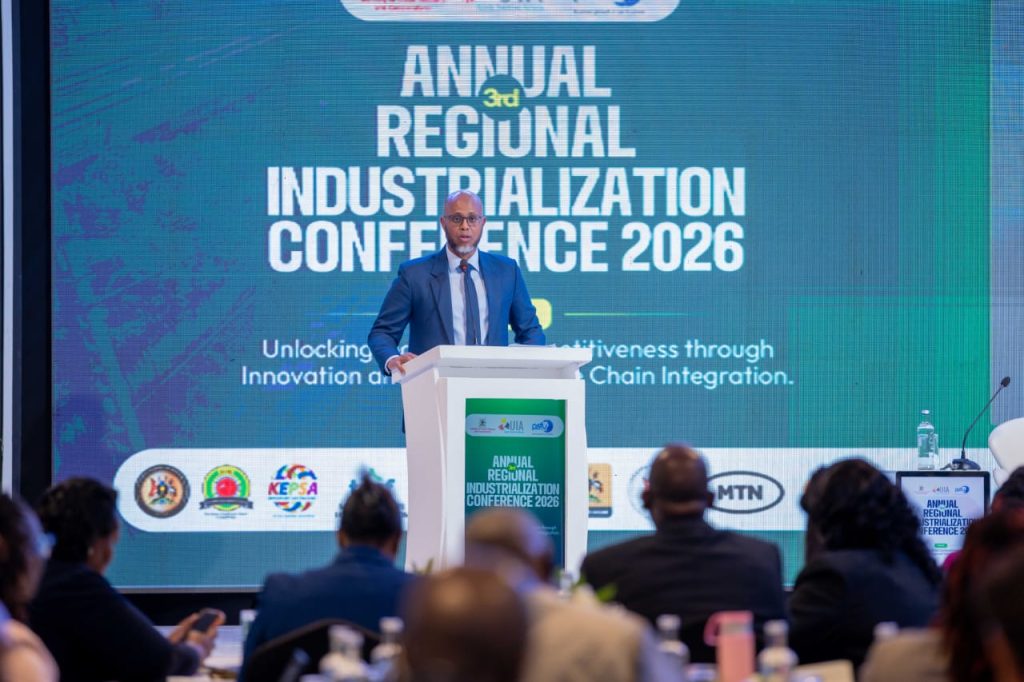 Mr. Ahmed Farah, EABC Executive Director, said East Africa has significant economic scale but has not sufficiently organised its regional market for industrial development. He noted that only about one in every eight dollars traded by the region stays within the EAC, while less than 20% of agricultural output is processed locally, resulting in lost value, jobs and technology.
Mr. Farah called for greater regional sourcing, cross-border production partnerships and stronger regional value chains, arguing that national economic ambitions must increasingly be built around the wider EAC and AfCFTA markets. Read the Executive Director’s Insights on the Conference
Mr. Stephen Asiimwe, Chief Executive Officer of PSFU, underscored the importance of addressing structural constraints affecting business competitiveness, including the cost of finance, infrastructure, energy, standards and the broader business environment.
The conference reinforced the need for stronger public–private partnerships, reduced trade barriers, competitive manufacturing and deeper regional value chains to move East Africa from policy commitments to production, investment, value addition and jobs.