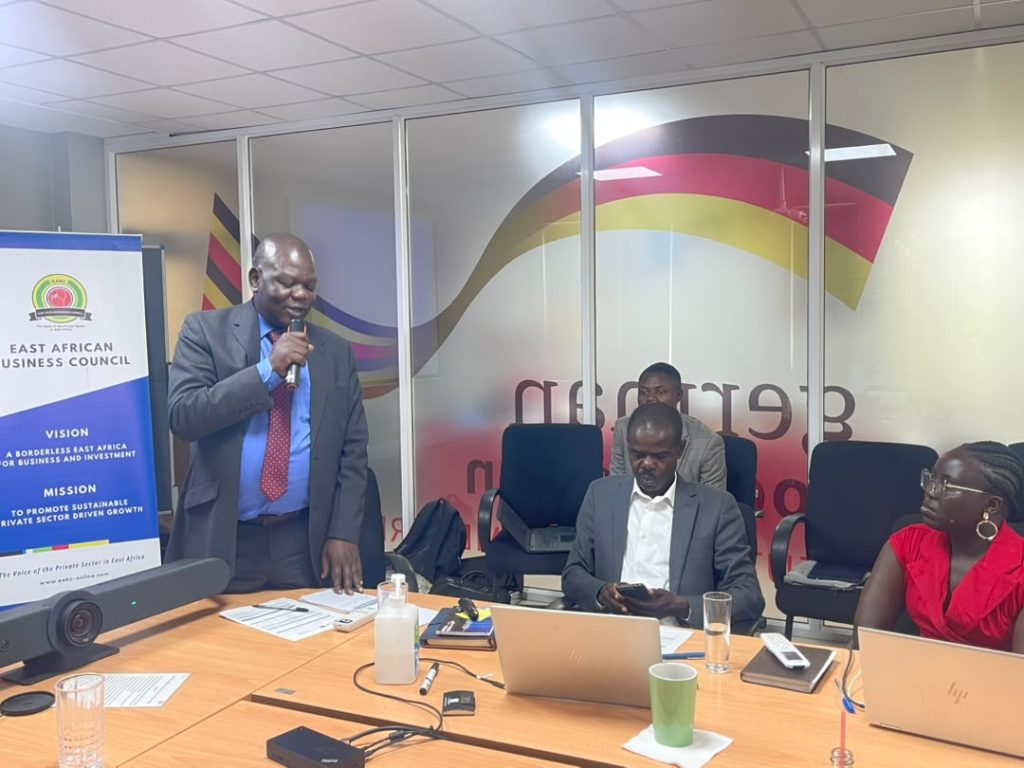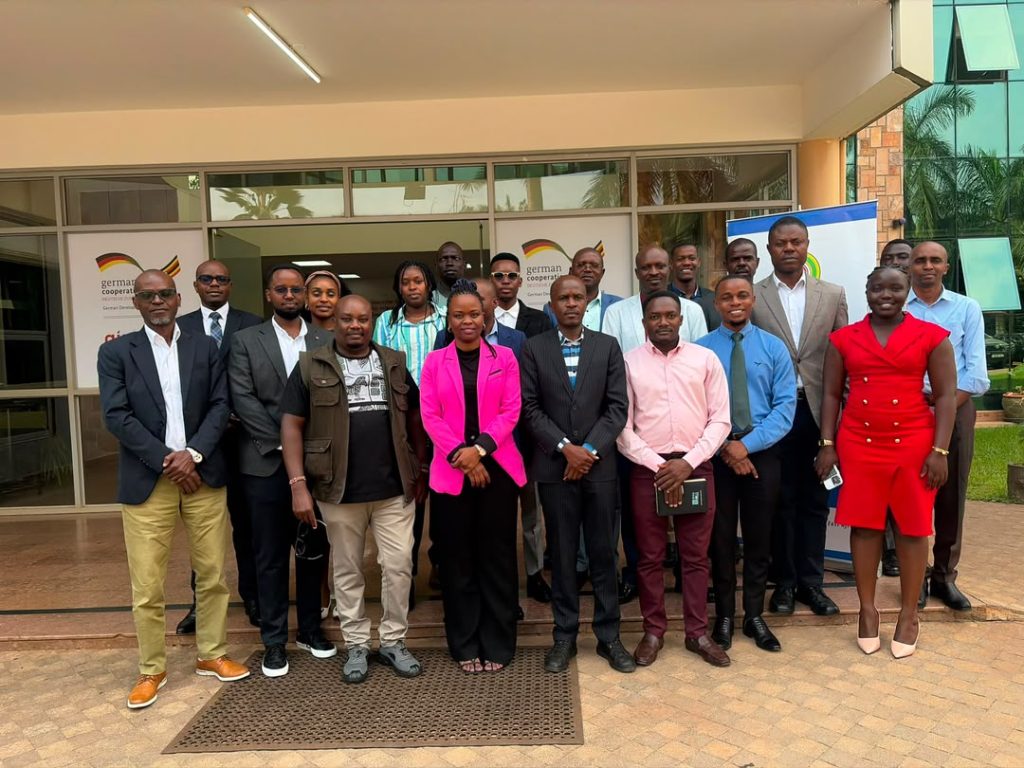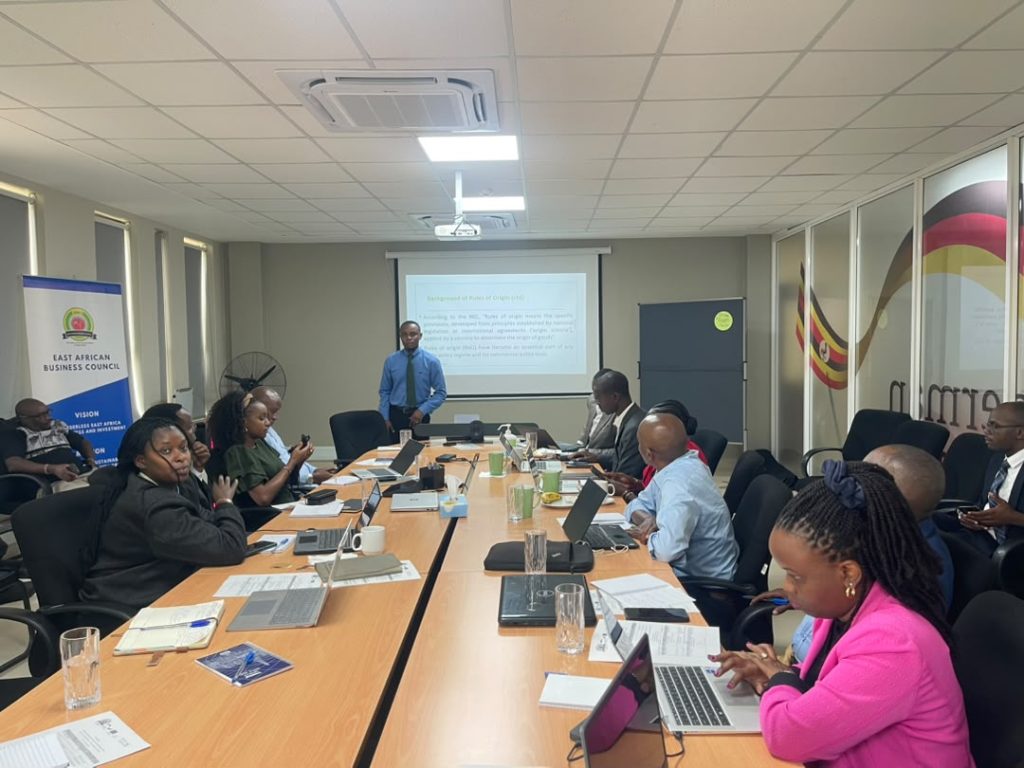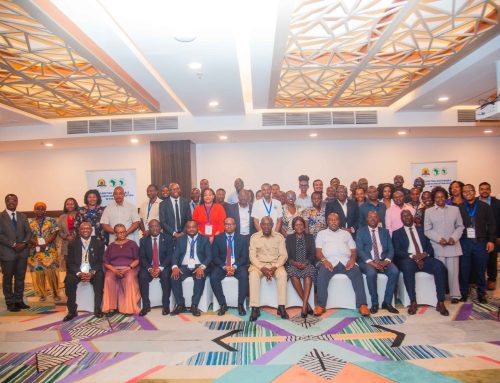
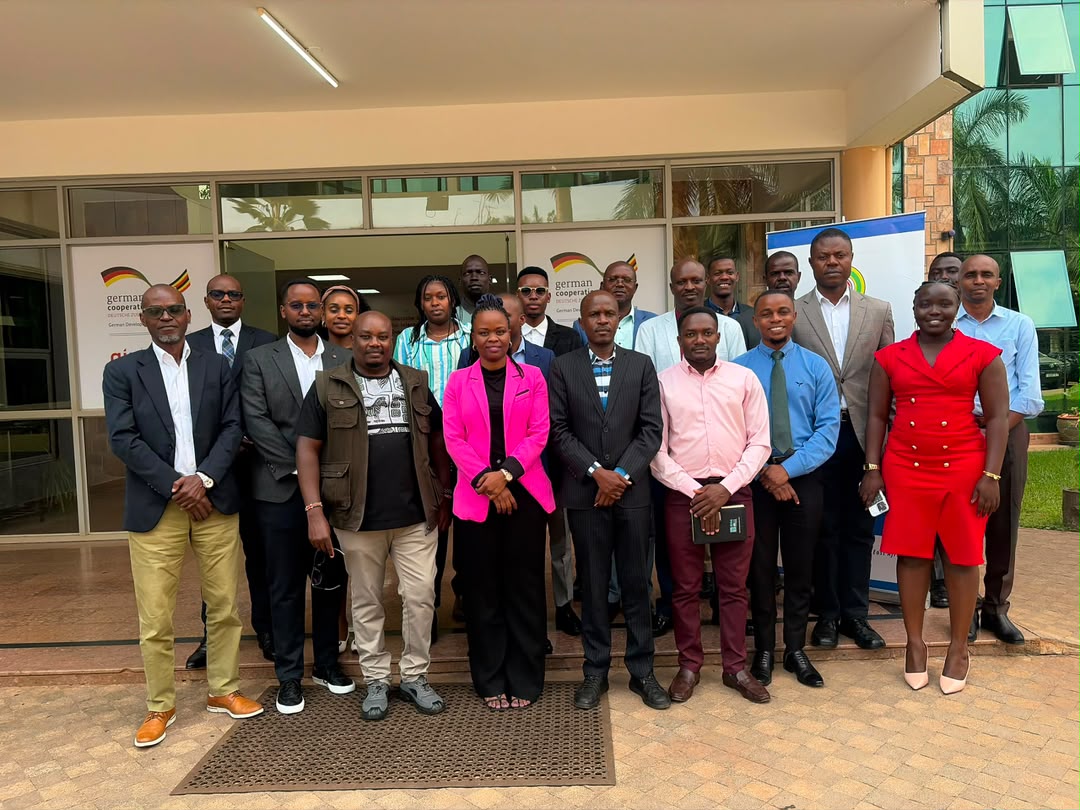
Kampala, Uganda, 18 August 2026: The East African Business Council (EABC), with support from the GIZ African Union (AU) African Continental Free Trade Area (AfCFTA) Programme II, strengthened the capacity of business membership organisations to understand and apply AfCFTA Rules of Origin and the Tariff Book.
Representing the Permanent Secretary, Ministry of Trade, Industry and Cooperatives, Uganda, Mr. Okot Okello Richard urged businesses to develop a strong practical understanding of the AfCFTA implementation framework, particularly the Rules of Origin, to qualify for preferential treatment. He also called on business membership organisations to support firms seeking to trade under the AfCFTA.
Despite the AfCFTA’s market of 1.3 billion people and a combined GDP of approximately US$3.4 trillion, intra-African trade remains at only around 16–18% of Africa’s total trade, highlighting significant untapped market opportunities.
Mr. Lamech Wesonga, Economic and Policy Advisor, GIZ, highlighted the importance of trade and regional integration in creating business opportunities, strengthening livelihoods and supporting economic transformation.
The three-day Regional Training of Trainers (ToT) Workshop brought together 30 representatives from National Apex Bodies, Manufacturers Associations and sectoral Business Membership Organisations across the EAC region.
The trained Business Membership Organisations will help firms understand Rules of Origin, tariff preferences and documentation requirements, enabling them to reduce compliance risks, optimise regional sourcing, identify new markets and make informed production, pricing and investment decisions.
Representing the EABC Executive Director, Mr. Gift Gabriel Mbuya, Research and Policy Officer – Trade in Goods, noted that the AfCFTA offers businesses opportunities to expand markets, increase production, develop regional value chains, attract investment and enhance competitiveness. He emphasised that these opportunities can only translate into increased trade when businesses have the knowledge and capacity to effectively utilise AfCFTA instruments.
Through the Training of Trainers model, participating organisations will cascade the knowledge and tools gained to their wider private-sector networks, helping businesses move from awareness of the AfCFTA to actual utilisation of preferential market access, increased intra-African trade and stronger regional value chains.